Mylar Happy Watermelons: A Designer’s Real-World Embroidery Review
First Impressions: Bright, Cheerful, and Perfectly Summer
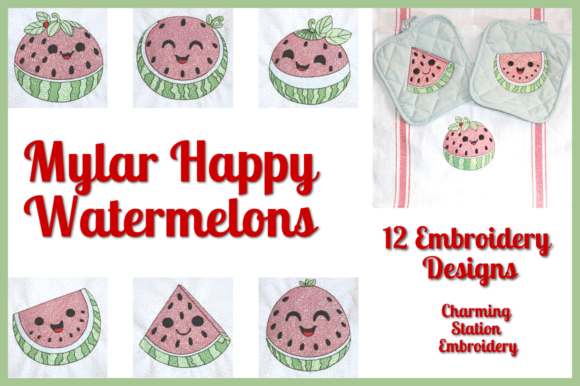
Opening the folder for Mylar Happy Watermelons, the first thing that hits me is the sheer brightness and playfulness of the designs. Each of the 12 watermelons has a slightly different expression, giving the set a lively, almost cartoonish charm. They’re clearly designed with a summer mood in mind, and the Mylar-specific digitizing makes sense the moment you imagine them stitched out. These aren’t hyper-realistic botanicals—they’re fun, stylized, and ideal for adding a pop of sparkle to seasonal items.
As a designer, I immediately thought of baby clothes, tote bags, and summer-themed apparel. The layout is clean and balanced, with no unnecessary details that could complicate stitching. The rounded shape of the watermelons also makes them versatile for placement on curved surfaces like caps or sleeves.
Real-Life Use: How Mylar Happy Watermelons Performs in Projects
I tested the design on a few different project types to see how it holds up in real embroidery work. Starting with a cotton tote bag, I used a 5x7 hoop and was pleased with how cleanly the Mylar thread caught the light. The sparkle is subtle but noticeable—exactly what you want for boutique-style merchandise or personalized gifts.
Next, I tried a sweatshirt using medium-weight knit fabric. I added a piece of lightweight stabilizer behind the hoop area, and the result was crisp. The satin-stitched outlines held their shape well, and the fill stitches were dense enough to cover the Mylar without looking cluttered. On darker fabric, the Mylar really shines, which makes this a great option for summer-themed custom apparel or Etsy listings that need visual pop.
- Baby items: Worked well on a onesie, especially the smaller 4x4 size. The happy faces add a whimsical touch perfect for baby showers or boutique baby clothes.
- Patches: The rounded shape and clear outlines make these easy to turn into embroidered patches. I used a heat-seal backing and they came out clean and professional.
- Holiday gifts: Stitched onto a tea towel with a coordinating thread, these watermelons gave a handmade, thoughtful look to a kitchen gift set.
Where to Use Mylar Happy Watermelons Carefully
While the design is strong overall, there are a few situations where extra care is needed. The 4x4 size, while adorable, does start to lose some detail, especially in the facial expressions. If you're planning to use it on a small hoop project like a cap or a curved surface, test it first on scrap fabric to ensure the details stitch clearly.
On stretchy fabrics like lightweight knits or thin cotton, I noticed a slight distortion in the satin-stitched outlines unless I used a firm stabilizer. This is especially important if you're making wearable items that will be washed regularly. Also, on textured fabrics like denim or linen, the Mylar doesn’t reflect light as brightly, so the sparkle effect is less pronounced.
If you're planning to layer the design under other stitches or combine it with applique elements, be sure to test the layering order. The Mylar can get flattened or dulled if stitched over, which would reduce the intended visual effect.
Design Impact: Visual Appeal and Marketability
From a visual standpoint, Mylar Happy Watermelons adds a strong sense of personality to any project. The cheerful expressions and sparkle factor elevate the handmade look, which is especially valuable for small shop owners or Etsy sellers trying to stand out.
In terms of customer appeal, these watermelons are a great fit for summer collections. They feel fresh and on-trend without being overly niche. I could easily see them used in boutique branding, seasonal merchandise, or even digital embroidery previews for online shops. The design’s clarity and simplicity also make it great for printable mockups—helping buyers visualize how it would look on different products.
For custom embroidery businesses, this design can serve as a reliable go-to for seasonal orders. It’s versatile enough to work across different product types, and the Mylar adds a subtle luxury that clients appreciate without being too flashy.
Practical Designer Notes for Best Results
Before jumping into a final project, here are some practical steps I recommend based on my experience with Mylar Happy Watermelons:
- Test on scrap fabric first, especially if you're using stretchy or textured materials.
- Check thread color contrast, especially if you’re not using the standard red and green. Some thread brands can dull the Mylar effect.
- Review stitch density, particularly in the fill areas. Adjust if needed to prevent puckering.
- Confirm hoop size before stitching on curved or tight spaces like caps or sleeves.
- Inspect small details, especially in the 4x4 version. Some expressions may not come through clearly on very small items.
- Test in black and white mockups to see how the design looks without the Mylar shine.
- Compare light and dark backgrounds to determine which fabric colors make the design pop most effectively.
- Use proper stabilizer to prevent distortion, especially on soft or stretchy fabrics.
- Verify licensing terms, especially if you plan to sell finished items or digital embroidery previews.
Final Thoughts: A Summer Staple for Embroidery Makers
Mylar Happy Watermelons is more than just a seasonal novelty—it’s a well-thought-out embroidery design that works across a variety of real-world projects. Whether you're making personalized gifts, custom apparel, or small shop merchandise, these watermelons offer a playful yet professional touch that’s hard to find in other summer-themed embroidery files.
It’s a solid addition to any embroidery library, especially for designers and small business owners looking to bring a bit of summer sparkle into their handmade offerings. Just be mindful of fabric type, hoop size, and stitch density, and you’ll get a polished, eye-catching result every time.